Get in touch
For a quick chat or more information about our services, get in touch:
Call Us
0141 266 0351
Email Us
Messenger
Use the messenger icon on any page
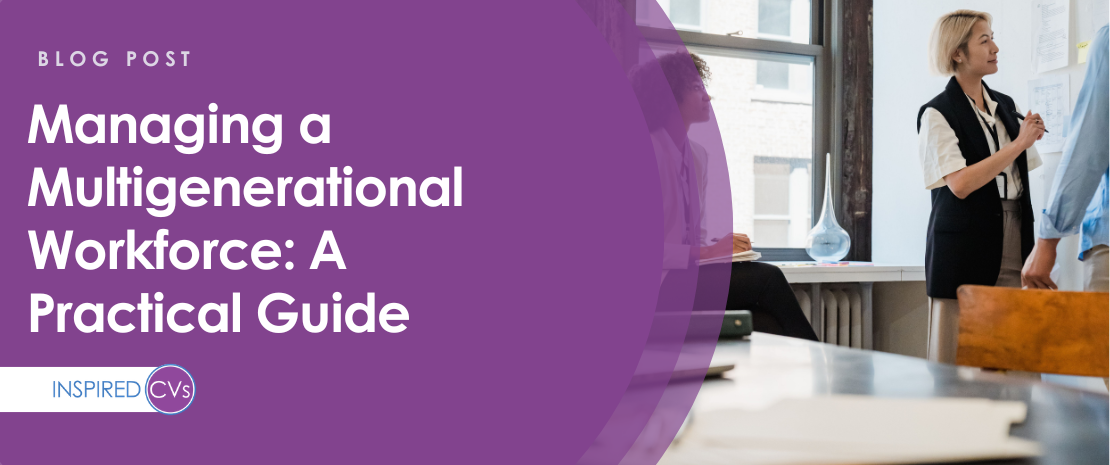
A multigenerational workforce can offer many benefits to a business, but it can also have its challenges. The generations currently in the workforce are typically the baby boomers (born 1946-1964), Gen X (1965-1980), Millennials (1981-1996) and Gen Z (1997 onwards.) With every generation, there are changing needs and it is important to incorporate the differences in order to nurture an effective workforce.
To successfully integrate a multigenerational workforce, it is important to understand what matters to each generation. While individual preferences will naturally vary, there are some common trends and priorities that can help employers create a more inclusive and effective multigenerational workplace.
Baby boomers are experienced and generally have a strong work ethic. They have been brought up in a generation where people stayed in their jobs for a long time, so are loyal and stable. Their experience and strong work ethic can enable them to become leaders within the workplace.
Best Attributes: Loyal, reliable, leaders, strong work ethic.
Gen X have a more free spirited outlook than you’d perhaps expect from baby boomers. Unlike baby boomers who have predominantly worked in a 9-5 environment, Gen X want flexibility and freedom in their job. They don’t want to be micro managed and want a bit more of a balance in their work and life. They have grown up in a time when the freelance (or gig economy) was at its peak.
Best Attributes: Creative, idea driven, independent, flexible.
Millennials are similar to Gen X in their desire for flexibility and autonomy. They don’t want to work for the sake of it, they want work that offers a purpose.
Best Attributes: Creative, independent, flexible, digital skills, purposeful.
Gen Z are interested in having flexibility and job security. They are also interested in roles where they can make a difference, such as jobs where sustainability is a priority.
When a multigenerational workforce work together, there are many benefits including the transfer of knowledge. Older workers will have more life experience which can help with leadership and mentoring, whereas younger workers are usually more efficient with tech. The ability to learn and share ideas from different perspectives can be hugely beneficial for an organisation, but it needs to be managed effectively and there are various ways to do it.
Baby boomers are used to a 9 to 5 structured office role, whereas the other generations prefer more flexibility. However, individual preferences and circumstances will always vary. To incorporate different needs, consider offering a flexible working pattern, as well as the ability to work in the office full time.
Incorporating different types of communication is important for a multigenerational workforce, as generations vary in the way they like to communicate. For example, baby boomers are more likely to prefer face to face or telephone communication, whereas the other generations may prefer to communicate via email, WhatsApp or video calls.
Incorporating a multigenerational workforce should be subtle. There is no need to make the differences obvious but instead, to foster a culture of inclusivity.
At Inspired CVs, we provide HR advice for both employers and employees. We also offer professionally written and designed CVs, tailored to your needs. Order from our shop or contact us to find out more.
For a quick chat or more information about our services, get in touch: