Get in touch
For a quick chat or more information about our services, get in touch:
Call Us
0141 266 0351
Email Us
Messenger
Use the messenger icon on any page

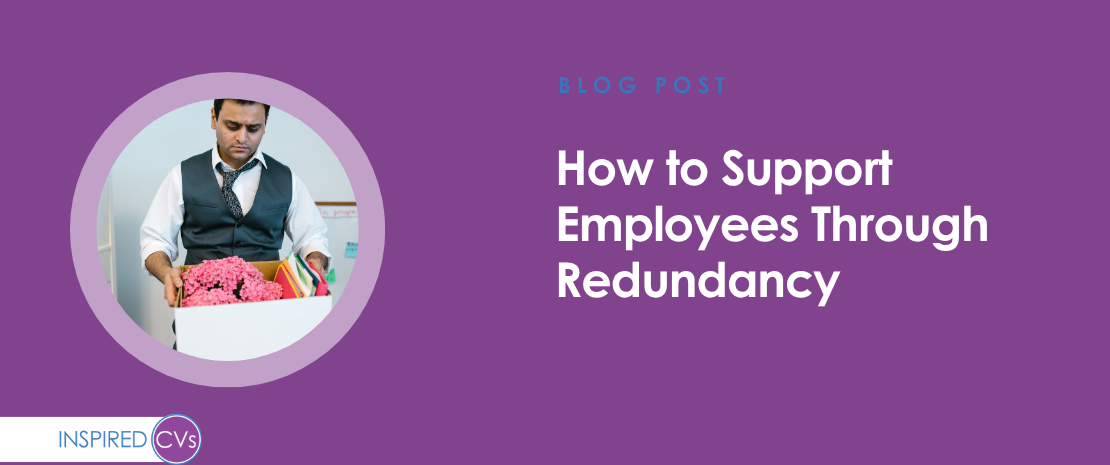
A survey by Acas found that 33% of employers were likely to make redundancies by January 2027. Redundancies happen for all kinds of reasons. It may be that the company is going through financial issues and can’t afford to have as many people on the payroll. Most commonly though; redundancies occur as a result of a takeover. Redundancies are difficult for everyone involved, particularly those who are directly impacted.
It is important to deal with redundancies sensitively and support employees as much as possible. These are some ways you can support employees during the redundancy process.
It is essential that employers consult with employees about the redundancy and during this process, they should also provide options for alternative employment, where possible. For instance, if you are making redundancies within administration but have roles within customer service, you may offer the employee the chance to apply for these roles. The employee does not need to accept this, but the employer should offer it.
Employers must allow employees to take paid time off for interviews and job searching. They may also arrange training for employees within their working time to help support them in securing a new role.
People who are being made redundant will often feel lost and may not know where to start with their job search. In some cases, employees may have been employed with the same organisation for a long period of time and going back into the world of unemployment can feel extremely daunting. If you can’t provide a service in house, then it is worth using a professional CV writing service.
It is advisable to keep open communication with employees throughout the redundancies, even if they have already left the organisation. It is a difficult period for employees and therefore it is important to provide support for their mental wellbeing.
At Inspired CVs, we can provide you with support for redundancies through CV support and one to one consultations. We can liaise directly with employees on your behalf to create a new CV and support them as they navigate the next stage of their career. Contact us to find out more. We offer discounts for bulk orders.

When it comes to taking holidays, the notice period you provide will often depend on the type of role you have. If you are working in the care sector for example, you are unlikely to be able to take last minute holidays, whereas, if you work in a large finance team, it is more likely that someone else will be able to pick up your workload at the last minute. With holidays, it is a good idea to give your employer as much notice as possible.
According the UK employment law, employees must give notice which equates to double the number of days you are taking off. However, the notice period may differ depending on your employment contract and the demands of the business. Employees are entitled to 5.6 weeks holiday per year; this would be pro rata based on your hours if you are a part time worker. You should check your contract for specific information relating to holidays, such as the dates the holidays run from and whether you can carry your holidays over to the next year.
Your employer can cancel your annual leave but they must have a valid business reason to do so and they are required by law to provide notice. The notice period must be the same amount of time as the length of the holiday. For instance, if you requested 7 days off, your employer must provide 7 days notice to cancel your holiday. The holiday cannot be cancelled to allow another employee to take time off (unless it is an emergency reason.) Employers should be aware of the impact this decision could have on the employee relationship, so it is advisable to only cancel annual leave as a last resort.
Employers may determine when you can take holidays if they have business needs to cater for at certain times. For example, it may be necessary to take holidays during the Christmas period if the company is closed during that spell. In contrast, they may ask that you refrain from taking holidays during the Christmas period if this is a particularly busy period. The employer must give notice regarding annual leave. If this is the same period every year, it should be in the employment contract.
If you need more information on HR issues, you can contact us or make a booking here. We also provide professional CVs if you are looking for a new role, as well as one to one consultation services.

n the UK, the employment rate is 75.1% for people aged 16 to 64, it has decreased slightly from the previous year. If you have been out of work for a while and you have an interview looming, you might feel awkward about explaining your unemployment. This is a normal apprehension and one that is felt by most candidates in this situation. However, unemployment can happen to anyone for any reason. It may be that you were made redundant from the role, you had to stop work to provide care to a family member or you may have decided to have a career break. These are some tips for explaining unemployment in a job interview.
Make sure you are prepared to answer questions about your unemployment in your interview, so you know exactly what you will say. If you are taken unaware with questions about the period where you were not working, you might end up making yourself more nervous, which could affect your job interview outcome.
Regardless of the reasons for your unemployment, it is important to be honest. There is no point in trying to bluff your way out of it, as the truth may come out in the future. Even if you have been fired from your last role, you should be honest about it. It might show up in an employment reference or somehow from your previous company may know someone from the company you are applying to. Honesty is always the best policy.
There is no need to go into huge amounts of detail when you are explaining unemployment. For instance, if you were let go from your last job, explain what happened and what you learnt from it but don’t start to go into the finer details. For example, you might say:
“I was let go from my last job due to my time keeping but this was a result of childcare responsibilities which has now been resolved.”
You being honest about what happened, you are explaining why and what you have done to resolve the issue. Employers are not there to judge you, and they will always appreciate your honesty.
Make sure you try to fill any unemployment gaps positively, rather than just stating you were unemployed. For example, you could say you were actively job hunting and attending careers fairs or you were undertaking training courses. Even something as simple as working out at the gym can show the recruiter that you haven’t just wasted your time during your period of unemployment. Unemployment can be difficult but showing that you remained positive and proactive can be a huge green flag to a potential employer.
At Inspired CV, we offer one to one career consultations which can help you overcome interviews to secure your dream job. To find out more about our one to one consultation services or professional CV writing services, contact us or order from our online store today.
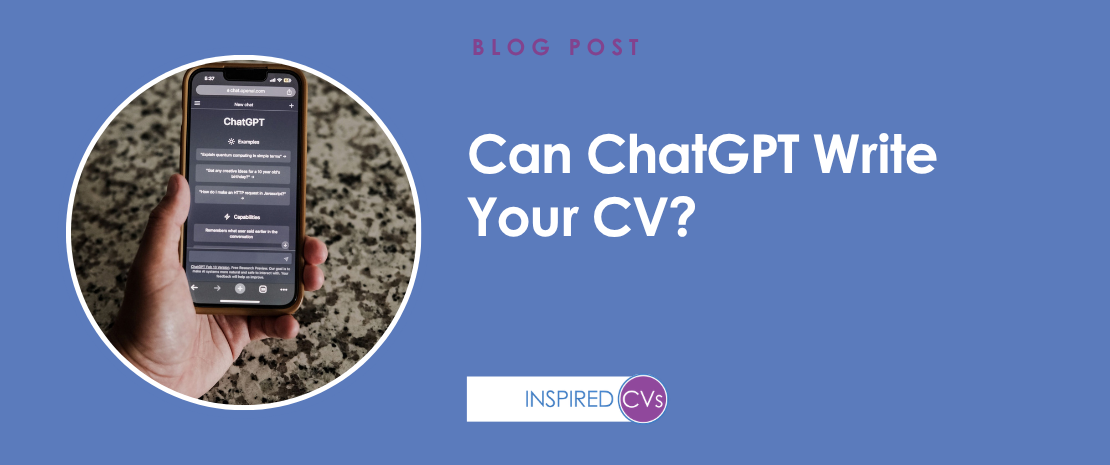
The use of AI seems to be taking over many elements of people’s lives, including their careers. It is becoming increasingly common for job seekers to use AI to write their CVs, and 83% of recruiters believe they are seeing the use of AI in job applications either frequently or occasionally. Although ChatGPT and other AI tools can be used as a tool to assist with CV writing, it is best to avoid using it to write your CV. These are some of the reasons to avoid using AI in CV writing.
Your personality should come across in your CV, which is why it is important to write it yourself or get a professional CV writer who has taken the time to speak to you first. AI uses generic language which means your CV will sound like every other CV on the recruiters desk. You want your CV to be original and to allow your personality to shine through.
If you simply throw your information into chatGPT and ask it to create a CV for you, it is likely to be full of errors and will often produce information on duties that you haven’t undertaken. You may be quizzed on these during an interview so it is important to take care when using AI.
Your CV should reflect the impact you had on a business, it shouldn’t just be full of buzzwords. For instance, you reduce absence levels by 50%, or you increased sales by 70% over a year. This is information that ChatGPT cannot provide, as it is personal to you and your own achievements.
The last thing you want is to create a CV that recruiters know is quite obviously AI, as you are likely to be rejected straight away. They may even check how much AI is used on your CV and reject you on that basis. Recruiters want to be sure that the information on your CV is factual, and that you have taken the time and effort to get it the way you want.
Take time and effort with your CV if you want it to stand out to recruiters. With so many candidates using chatGPT to create their CVs, you will be sure to make an impact for the right reasons.
If you are looking for a new CV, we can help at Inspired CVs, you can contact us to find out more by emailing

When you are looking for work, it can be tempting to spend entire days searching for a new role. However, this can lead you to feeling completely exasperated and miserable. When you are out of work, it is important to keep on top of your physical and mental wellbeing, as the whole situation can quite easily lead you to spiral into depression. This is usually as much due to the constant focus on the situation as it is the situation itself. Spending one hour a day on job hunting should be sufficient if you stay focused. These are some ways to spend your one hour a day on job searching.
Spend 30 minutes of your day applying for jobs, this may be slightly more if some of these are full applications. Keep a record of each job you apply for, together with the closing date.
Send out connection requests to the companies you have applied to - usually the director or a contact from HR. Then, send out messages to the connections you have received from the previous day. You can send something like this:
“Thanks for accepting my connection. I just wanted to reach out as I applied for your Electrical Engineer job in Glasgow and wanted to check you received it and reaffirm my interest in the job.”
It is important to follow up on applications. If they reply to say you have been unsuccessful, make sure you ask for feedback.
You can also spend 15 minutes of your day reaching out to companies you are interested in and sending a speculative application. Not all companies spend money advertising on job sites, and others may not have vacancies at present, but might in the future. You can do this by using Linkedin to connect with decision makers, such as the director or HR and sending a message to ask about current vacancies or future prospects. For instance:
“Thanks for accepting my connection. I’m currently looking for a social media marketing role and although I couldn’t see anything advertised on your website - I wondered if I could send my CV over for any future roles you may have. I’m extremely interested in your company - so would love the opportunity to speak to someone about my experience.”
You can only do so much when you are job hunting, so assign one hour a day and spend the rest of your day undertaking relevant courses to enhance your CV where possible. You should also look after your physical and mental wellbeing by spending time outdoors, and seeing friends and family.
At Inspired CVs, we provide one to one consultations to help with your job search, including a free recruitment service, job searching tips and mock interview practice. We also create professional CVs which are tailored to suit your career goals. You can contact us today to find out more or order directly.

When you are job hunting, it is important to be prepared for last minute interviews, and to take the opportunity when it presents itself. You might be tempted to reject the chance to attend an interview the following day due to interview anxiety - however, you may not be able to reschedule. Even if you have notice, it is important to use the 24 hours leading up to the interview wisely. These are some ways you can prepare for the interview ahead.
Even if you have already conducted some research on the company, utilise the 24 hours before it to refresh your memory. Take a look at the website to understand a bit more about their products or services, competitors and values. Any significant achievements can also be useful to fit into the interview to show you have done your homework.
When preparing for an interview, you should always remember that the employer will be focused on the job spec and whether you have the expertise that matches it. You should prepare accordingly by providing examples for each aspect of the job spec that are relevant to you. Do not be afraid to tell the employer about parts of the job spec where you might not have the experience, it is better to be honest than to tell untruths during the interview.
The employer will ask if you have any questions at the end, and you should always respond to this as otherwise, you may seem disinterested. Some questions to consider asking include:
What is the culture of the organisation?
Where does this role fit within the whole organisation?
What is the management style?
What are the priorities of the position?
At this stage, it is best to avoid asking about salary and benefits, you can discuss these aspects if you are offered the role. Although - you should only apply for roles that fit in with your salary expectations so that you are not wasting your own time.
You should always give a good first impression by being dressed professionally for an interview - regardless of whether you expect it to be informal or not. Even if your interview is being conducted online, you should wear appropriate workwear. You should also plan your travel prior to the interview and ensure you give yourself plenty of time. It is much better to be early than late for an interview.
A good night’s sleep is crucial before an interview. Even if you are feeling anxious, you should prioritise rest. You will be much more alert and calm if you have slept well during the night.
At Inspired CVs, we can help you prepare for interviews and follow up on feedback through our one to one coaching sessions. We also provide CV workshops which are useful for community organisations, schools, universities and the workplace. Contact us today to find out more.

One of the most frustrating aspects of successfully completing a degree is the search for a job afterwards. It can be difficult to know where to start when you leave University, and you might feel completely lost. These feelings are natural and very common. If you are feeling overwhelmed when searching for a new job after graduation, these are some tips for how to secure your first job in the sector you are interested in.
The first step before starting your job search is to make sure you have a top notch CV. It is more beneficial to get a professional CV created to give you the best chance of success when looking for a new role. A professionally designed CV will highlight your main attributes and will focus on transferable skills you have gained from other jobs and University.
It is also important to be visible on LinkedIn, as this is the main platform you will use for building a network and following up on your applications. If possible, this should also be professionally done so that you are hitting all the right keywords to help recruiters find you.
Make a list of companies that you are interested in applying to, you may also want to do a search for companies that offer graduate schemes. Take a look at their website and see whether they are hiring and what vacancies they have which you can apply to.
Use job sites such as Indeed and CV library to find jobs to apply for. You can also apply for jobs on LinkedIn and various other sites. You may also want to register with recruitment agencies within your industry.
LinkedIn is your best friend when applying for jobs after University, as it allows you to connect with the decision makers. Although it may seem time consuming, you should connect with the decision maker (director, HR or recruitment) for every job you apply for and follow up on your application. If you receive a rejection letter, ask them to provide more details as this can help with your future job search. If there are specific companies you like but they don’t currently have vacancies, connect with them on LinkedIn and let them know you are searching for a new job.
At Inspired CVs, we provide one to one coaching services to help you with your career journey. You can order your one to one consultation here or contact us to find out more about our services. We also provide professional CVs, tailored to suit your career goals.

Constructive feedback in the workplace is important as it helps individuals to learn, grow and develop. The thought of giving feedback can often seem quite daunting, as you don’t know how it will be received. It is crucial to be honest when providing feedback, otherwise it won’t have the desired effect. These are some tips for giving constructive feedback in the workplace.
When delivering constructive feedback in the workplace , you should focus on the positives, even if you need to discuss some less favourable aspects. For instance, you might tell an employee during a performance review that they are a great leader and build strong relationships with their colleagues, but they could improve their delegation skills. When you make the negative aspects the focal point in a feedback discussion, you instantly put the employee on the back foot and make them feel under attack. Similarly, if you are providing feedback on a piece of work that a colleague has created, make sure you tell them the good points first, before you discuss the aspects that could be improved.
There is no point in delivering constructive feedback in the workplace without any suggestions for how to improve it, as it will just feel like criticism. For instance, if you are having a difficult discussion with a manager about their poor management skills, you might suggest that they attend management training to improve their performance. Similarly, if you are providing feedback on a colleague’s PowerPoint presentation, give them some ideas for how to make improvements.
Most people feel a little uncomfortable when receiving constructive feedback in the workplace and to help them feel a bit more at ease, you can ask them for feedback too. For example, if you are undertaking a performance review with an employee, you might say something like “do you agree with the feedback I’ve provided, or is there anything you feel I may have misunderstood or gotten wrong?” It should always be a conversation, rather than a discussion that only goes one way.
It is much easier to take constructive feedback in the workplace from someone you know well and have a good relationship with, which is why it is important to build relationships before you do this. For instance, if someone presents a spreadsheet to you which is full of mistakes but you have only just started in a job, it is best not to say anything - unless directly asked. Offering unsolicited feedback can instantly put you on the back foot in a job. However, if you know the person and have a good friendship, they will take it in the way it is intended.
At Inspired CVs, we can help with HR issues, as well as providing a professional CV writing service tailored to suit your needs. Contact us today or order your CV directly from our shop.
For a quick chat or more information about our services, get in touch: